

How To Remove Stone Fireplace
Removing an old burn surroundings
When it comes to renovating an old property, i of the beginning things which may need to exist considered is whether to keep old open up fireplaces – with modern central heating systems, an open fireplace tin just be an escape route for heated air.
Before you lot start to remove the fire surround or hearth it'south worth asking yourself if they accept a resale value – cast atomic number 26 and old timber surrounds can have a value which makes their careful removal worthwhile - brick and tile surrounds dating from the 1940's don't usually have a resale value. If in doubt, ask an proficient – once you've damaged or broken up the surround, information technology will have picayune or no value.
Removing an old fireplace involves three master steps - removing the environs (which may be one of several types), removing a raised hearth if there is i, and sealing up the fireplace opening (unless a new hearth/burn environment is going to be fitted).
Below we encompass removing:
- A cast iron burn down surroundings.
- A tiled fire surround.
- A timber fire surround.
- A brick or stone fire surround.
- A hearth, which may have been fitted with any of the above.
Once a fire surround has been removed, the opening can be bricked upward, or boarded up over a timber frame congenital across the front of the opening. Before the opening is closed up, the chimney should be swept and the summit of the chimney capped past a builder.
A cast-iron fire environs
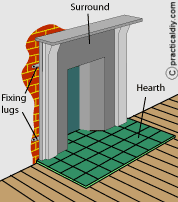
- A cast-fe fire surround is usually fixed to the wall by screws through metal lugs near the top on each side, ofttimes in that location are also lugs towards the lesser; these will be hidden past the wall plaster. After removing whatsoever wall covering, carefully flake away the plaster all effectually the surround to expose the fixings and besides give clearance when the environment is removed.
- Cast-iron fire surrounds are frequently top heavy then earlier starting to remove the fixings, wedge a length of timber betwixt the meridian of the environment and the floor to prevent information technology fall when the fixings are released.
- Clear the slots in the fixing screws of plaster and if possible remove them. If the fixings cannot be removed, effort to carefully prise the lugs away from the wall, exist very careful when attempting this every bit bandage-iron is very breakable and tin hands break – such impairment will lower the value of the surroundings if yous intend to sell it.
- The grate (the centre piece going dorsum into the fireplace) may be fixed to the environment with screws or bolts, but there is no demand to carve up them as the surround and grate will come out together.
- In one case the fixings have been removed, take the weight of the environment, remove the piece of woods supporting the surround and pulling the surround forward, lower on to the floor.
If you desire to split the grate from the fire surround, the fixing screws/bolts volition probably be seized solid and will probably need to be soaked penetrating oil before they can be loosened, this may take several applications of oil over a 24 hours menstruum.
If the screws/bolts can still not be loosened, they may be removed past either using a nut splitter (which tin be hired) or drilled out using a high-speed-steel twist of less than the diameter of the screw shank.
A tiled file surroundings
A tiled burn surround normally has a concrete bankroll to which the tiles are fixed and is screwed to the chimney breast through metal lugs, in the aforementioned style as a cast-iron surround. The concrete ways that the environment will be very heavy, and it is best to have someone else available to agree information technology steady and help motion it abroad.
Where a raised tile hearth is fitted, this will either be resting against the front of the environment, or the surround may balance on the back of hearth. If the hearth rests confronting the forepart of the surround, it needs to be removed first (see beneath).
- A tiled fire surround is usually fixed to the wall by screws through metallic lugs near the top on each side, oftentimes there are also lugs towards the bottom; these will be hidden past the wall plaster. Later removing any wall covering, carefully flake away the plaster all around the surround to expose the fixings and also requite clearance when the surround is removed.
- Articulate the slots in the fixing screws of plaster and if possible remove them. If the fixings cannot be removed, endeavour to prise the lugs abroad from the wall.
- As the fixings are removed, get someone to steady the environs to prevent if falling.
- One time the fixings have been removed, lower the environs with the aid of your helper. If possible, movement the environment outside for breaking up.
- To intermission up the surround, lay it face down on a firm base and comprehend it with sacking, or an erstwhile mantle. Wearing protective gloves and safe spectacles, use a sledgehammer to break it upwards into smaller pieces – there may exist some metal strengthening within the physical which you lot would need to release past breaking the physical to release them.
A timber burn environs
Modern timber burn down surrounds are often secured to the chimney chest using lugs on the side subconscious behind the plaster. Old timber fire surrounds were often screwed to wooden battens fixed to the chimney breast.
There may be a tiled inner surround which has to be removed separately or a not-inflammable inner surroundings fastened between the sides of the outer environment.
- Look over the surface of the timber to locate the screw heads, they may be covered with filler or possible hidden behind a decorative moulding. If the position of the screws is not obvious, assume that side lugs are used and chip away the plaster downwards one side of the environs; if this reveals a lug, deport on chipping away the plaster from effectually the surround and remove the surround as outlined for cast-iron burn surrounds to a higher place.
- If no lugs are revealed, it suggests that the surroundings is secured to battens on the wall. If the surround has been painted or varnished, this will probably need to stripped off earlier you lot have a chance to locate the screw positions.
- Carefully remove the filler and clean the screw slots, and undo the screws.
- Lift the environs away and remove the battens from the wall.
- Remove any inner tiled environment, it is usually fairly light and can be moved by one person.
A brick or rock fire environs
Start by checking that the fire surround is fabricated from real brick or stone and not just thin brick or rock facings attached to a physical bankroll. If it is just brick or stone facing, removal in the same as for a tiled surround above.
A real brick or stone fire environs needs to be removed brick by brick (or stone by stone).
Wearing protective gloves and safety spectacles, use a hammer and cold chisel to chip abroad the mortar to loosen each brick/stone starting at the terminate of the elevation form, piece of work your way along and down.
There may exist metallic ties or nails in the mortar joints and attached to the chimney breast. To remove these, chip abroad the wall to costless them.
Removing a tiled, brick or rock hearth
A hearth may consist of a tiled slab of concrete or a number of rock or bricks. The raised hearth is bonded using mortar to a concrete slab (known as the constructional hearth) flush with the flooring and projecting into the room.
Often the mortar used under a tiled concrete hearth will be fairly weak as the weight of it lonely volition hold it in place. Use a hammer and common cold chisel to brand a hole in the mortar then that a crowbar can exist inserted to lift the hearth – once the mortar bond is broken, it will demand a couple of people to acquit information technology outside where it tin can be broken upwards in the same fashion as a tiled fire surround.
Where individual tiles, bricks or rock are bonded directly to the constructional hearth, wearable protective gloves and goggles and use a hammer and cold chisel to chip away the mortar to loosen each individual tile, brick or stone; or bit abroad sufficient mortar and then that they tin can exist private prised off.
The constructional hearth should be left in place and cocky-leveling compound used if necessary to polish the tiptop earlier whatsoever floor covering is laid.

How To Remove Stone Fireplace,
Source: https://www.practicaldiy.com/general-building/fireplace-removal/fireplace-surround-removal.php
Posted by: clynetwerme.blogspot.com
0 Response to "How To Remove Stone Fireplace"
Post a Comment